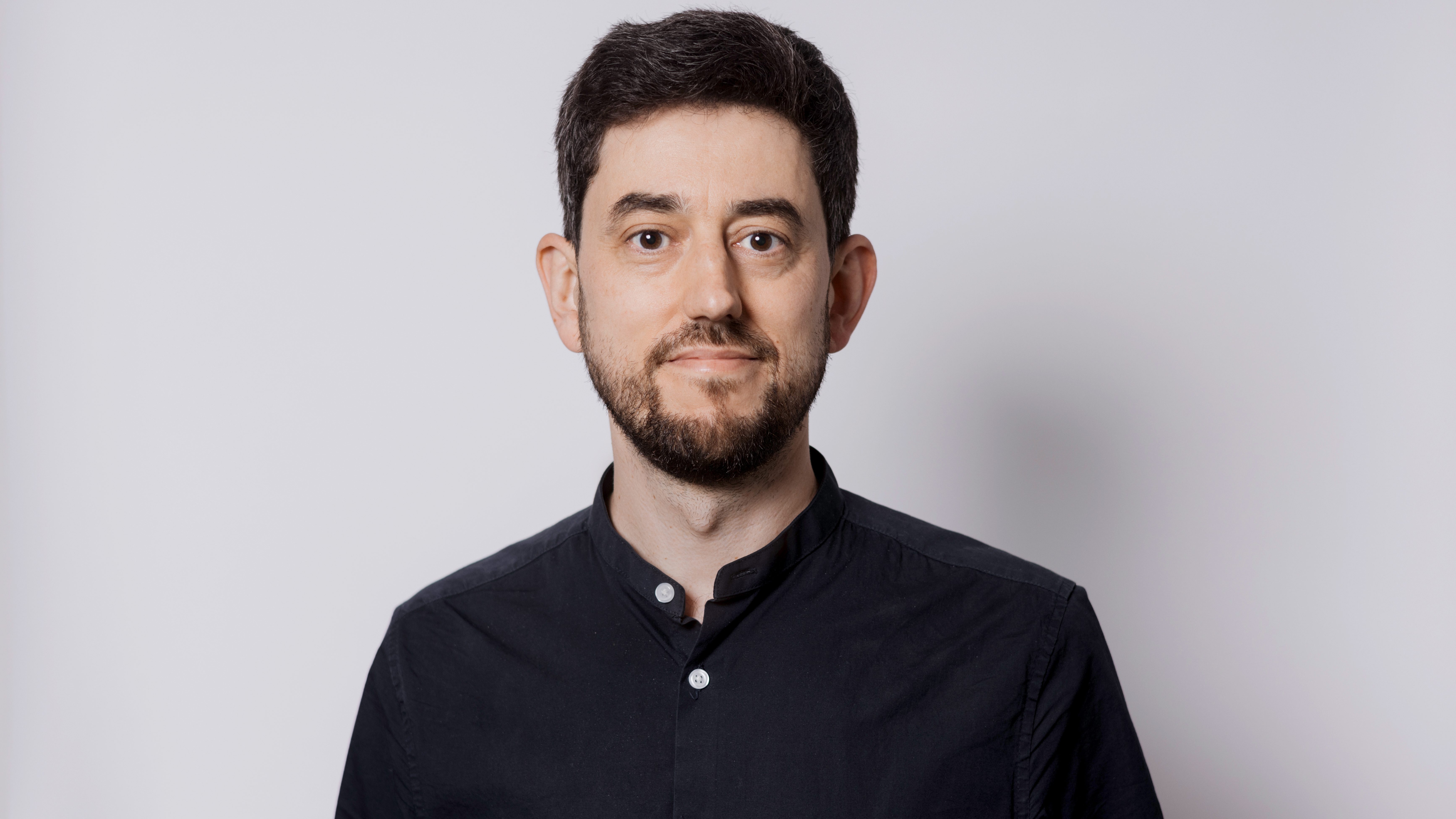
Prof. Dr. Sergio P. Acebrón
As a PhD student, I was fascinated by the mechanical complexity and yet biophysical adaptability of molecular machines and protein networks (Acebrón et al., JBC 2008, Acebrón et al., FEBS 2009). This mechanistic mindset has permeated my research as postdoc, project leader, and now as a group leader. I always strive to identify and characterise novel molecular mechanisms, and to understand their functional context across the biological scales of life:
If you ask any biologist how canonical WNT signalling exerts its functions during development, they will likely say via β-catenin-dependent transcription. As postdoc and project leader, I challenged this textbook knowledge by identifying that WNT signalling also promotes a novel post-translational programme, which we named WNT/STOP (Acebron et al., Mol Cell 2014; Acebron & Niehrs Trends Cell Biol 2016). Our discovery opened new biology to be explored beyond traditional models previously studied in WNT signalling. For example, we found that WNT signalling orchestrates a rich, post-translational programme required for mammal sperm maturation and motility in the epididymis; and uncovered a subset of infertility in man (Koch, Acebron, et al., CELL 2015). We also provided the first evidence for WNT/STOP activity in development. We identified that WNT/STOP is required for the first embryonic cleavages in transcriptionally silent Xenopus zygotes (Huang et al., PNAS 2015). Beyond basic research, our discoveries have been utilised by others to develop novel therapeutical avenues for drug-resistant acute leukaemia (Hinze et al., Cancer Cell 2019).
My lab aims to unravel the molecular networks that allow cells to integrate microenvironmental information to build and maintain our tissues. We combine single-cell and population OMICs (scEdU-seq, sci&T-seq), live imaging, genome-editing and molecular analyses with i) 2D/3D stem cell models of mouse/human development and physiology (including patient-derived organoids), and ii) in vivo approaches in mice.
Our work identified a molecular switch between WNT and p53 that sharply controls the response of intestinal stem cells to their niche signals, and found that it functions as roadblock for EMT and growth in colorectal cancer (Giebel et al., EMBO R 2021). For these discoveries, I was awarded the Hella Bühler Preis 2021 for “outstanding work in cancer research”.
How genomic stability is monitored across generations of different cellular lineages, and why the rate and distribution of mosaicism vary through development remain open questions. We found that patterning signals do not only read our genetic blueprints, but have a moonlighting role in their maintenance. We identified two distinct signalling programmes controlling genome stability: First, we demonstrated that WNT signals function directly during mitosis to ensure the alignment of chromosomes before division (Bufe et al., PNAS 2021, Habib & Acebrón Trends Cell Biol 2022). Second, we revealed a novel multi-signalling rheostat that monitors DNA replication and damage during S-phase, which in turn controls faithful chromosome segregation in mitosis (De Jaime et al., Nature Comm 2024, van Berg Nature Methods 2024). We analysed this novel signalling mechanism across embryonic lineages, and i) revealed that patterning signals have antagonising roles in the regulation of genome maintenance during early human lineage specification with important implications to understand how mosaicism arises in peri-implantation embryos: the leading cause of miscarriage; and ii) uncovered a tug-of-war between brain patterning signals that triggers mutations and aneuploidy during neurogenesis, which could provide a rationale for the high levels of mosaicism in the human brain (De Jaime et al., Nature Comm 2024).
Production of cGAMP upon recognition of aberrant dsDNA, including from DNA damage byproducts, by the cGAS-STING pathway is critical for the detection of transformed cells. We engineered a novel biosensor for single cell characterisation of the spatio-temporal dynamics of the response to dsDNA and microenvironmental cGAMP (Smarduch et al., EMBO J 2025), with promising results for anti-cancer immunity.
Importantly, during my career I have been extremely active in mentoring and supporting younger researchers. I co-founded and led the Society of Spanish Researchers in Germany (CERFA), organised the largest event on scientific careers in Spain (science+, highlighted by SCIENCE), and contributed to career development expert panels (AECC Talent, CRUK, DAAD). For 7 years, I served as elected member of an inter-institutional research council at Heidelberg University directing research developments in our campus. Beyond management, I developed courses that integrate scientific competences as core parts of the teaching programme. I apply this philosophy to my lab: all my students finished their PhD within 4 years with a first author paper in a respected journal, 2 of 4 obtained the Schmeil award for “Best PhD”. Of note, my first postdoc recently became group leader at ULB (Belgium), highlighting the value of my mentoring strategy. Finally, I have 15 years’ experience on sharing my research to the general public, including to the largest platform of science communication in Spanish (Naukas).
CV – Sergio P. Acebrón
Professional career after scientific training
01/26 – Ikerbasque Research Professor in Microenvironmental Cell Biology. María Goyri Institute for Biotechnology, EHU (Spain)
02/23 – Professor of Cell signalling & Genome stability, Centre for Organismal Studies (COS), Heidelberg University (Germany)
07/17 – 01/23 Independent group leader and lecturer, Cell signalling lab, Centre for Organismal Studies (COS), Heidelberg University (Germany)
2012 – 2017 Project leader, Division of Molecular Embryology. German Cancer Research Center – DKFZ (Germany). Advisor: Prof. Christof Niehrs
2009 – 2012 Postdoctoral fellow, Division of Molecular Embryology. German Cancer Research Center – DKFZ (Germany). Advisor: Prof. Christof Niehrs
Academic education
2008 PhD in Biochemistry. University of the Basque Country/Basque Centre for Biophysics (Bilbao, Spain). Project: Protein disaggregation by molecular chaperones. Highest grade by unanimity, equivalent to Summa Cum Laude. Advisor: Prof. Arturo Muga
2004 Undergraduate studies in Biochemistry and Molecular Biology, University of the Basque Country (Bilbao, Spain)
Selected awards, responsibilities, and memberships
2025 Steering committee WNT consortium SFB1324
2024 Co-organiser of the international WNT meeting 2024
2022 Hella Bühler Preis 2021 for “outstanding work in cancer research”
2022 – Expert Review Panel of CRUK Research Career Awards, AECC, and DAAD.
2018 – Elected member of the Heidelberg Life Sciences Research Council
2018 Visiting lecturer in Nagoya and Osaka Universities, “Foreign Researcher Program”
2017 CRUK Career Development Award [Declined]
2012 – 2015 Vice-president (2012 – 2014) and President (2014 – 2015) of the Society of Spanish Researchers in Germany (CERFA)
 Acebrón Lab